// EDUCATION & TECHNOLOGY: Mobile
Showing posts with label Mobile. Show all posts

Wednesday, 17 June 2015

10 Most expensive Mobile handset in the world


Phone is a major requirement of our daily lives. Mobile phone or even has the prices vary widely ranging from the cheapest phones in the world up to the most expensive mobile phone in the world. In today’s society, there aren’t many things that people are more attached to than their mobile phones. A person’s cell phone is his gateway into everything that goes on in his life. With the recent advances in technology, it now seems as if your cell phone can do everything that your computer can do. It then comes as no surprise that your cell phone could cost as much as it does. If you’re in the market for a phone that will do nearly everything, then you should expect to pay a lot of money. Here is a list of world’s top 10 most expensive mobile phones.
These are 10 Most Expensive Mobile Phones in the World.

10. Vertu Signature Diamond
10 Most Expensive Mobile Phones
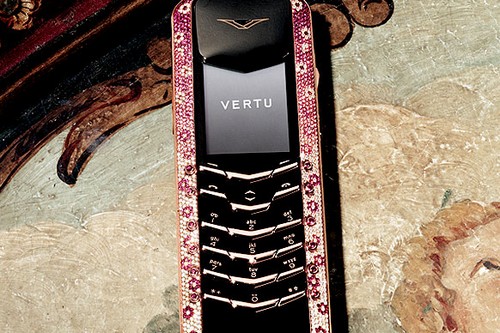
Exclusive luxury phones from Vertu. Vertu is very famous for its luxury mobile phone products, including mobile phones Vertu Signature Diamond is included in order to-10 list of the world’s most expensive mobile phones. This phone is made of platinum and claimed the best assembly process is done by hand, not machines. Phone decorated with a pretty fancy diamonds produced only 200 pieces. The price of this phone is $ 88,000.

9. iPhone Princess Plus
10 Most Expensive Mobile Phones
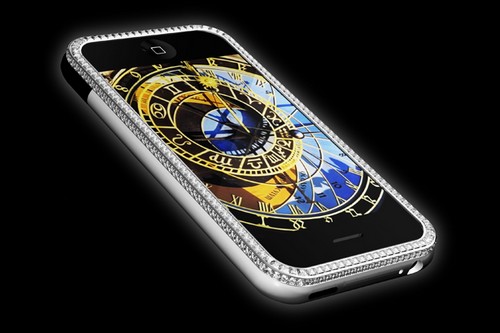
iPhone Princess Plus has a feature that is not much different from other Apple iPhone mobile phone, which makes this into the top 10 most expensive mobile phones in the world. This iPhone is designed by famous designer Austria, Peter Aloisson. Beside the gold, this special iPhone flavour comes with no less than 138 princess cut and 180 brilliant cut diamonds with a weight of 16.50 – 17.75. And according to Peter Aloisson, the diamonds have the best quality, so owning such a device is quite a remarkable thing. It’s price is $ 176.400.

8. BlackDiamond VIPN Smartphone
10 Most Expensive Mobile Phones
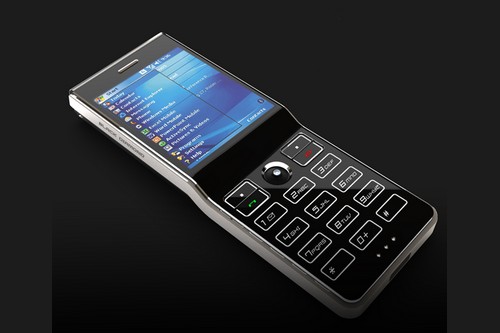
At no. 8 in the world’s most expensive mobile phone is Sony Ericsson’s Black Diamond. Jaren Goh created this stylish concept for Sony. It features mirror detailing, polycarbonate mirror and an organic LED technology. Of course, when it comes to Sony, nobody can challenge the screen results. It is decorated with two diamonds, one on the navigation buttons and the other in the back of the phone. The price of this phone is $300,000.

7. Vertu Signature Cobra
10 Most Expensive Mobile Phones
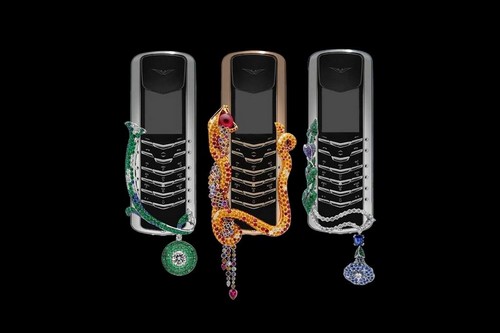
Vertu Signature Cobra ranks seven of the world’s most expensive mobile phone. The designs are quite exclusive with the existence of forms such as the Cobra snake on the phone side. Designed by French jeweller, Boucheron, the ritzy phone features one pear-cut diamond, one round white diamond, two emerald eyes, and 439 rubies.

6. Gresso Luxor Las Vegas Jackpot
10 Most Expensive Mobile Phones
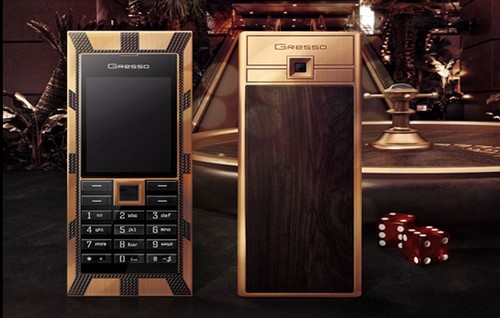
This phone comes from a traditional purveyor of a luxury handsets – Gresso, and is called Luxor Las Vegas Jackpot. This phone was established in Switzerland in 2005. It is made of solid gold weighing 180 grams. The back panel is made up of African backwoods that is more than 200 years old. That wood is the most expensive wood in the world. Its keys are made of sapphire crystal. And it costs a cool $1 million.

5. Diamond Crypto Smartphone
10 Most Expensive Mobile Phones
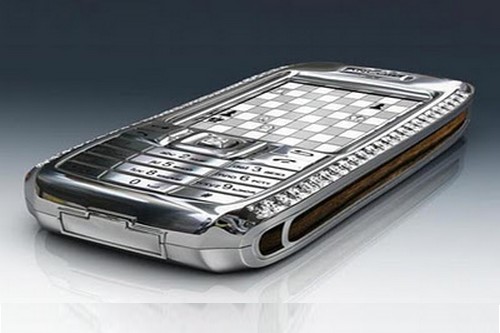
Based on Windows CE, this smart phone was designed by luxury accessories maker Peter Aloisson. This unique object de art is priced at a crisp $1.3 million and is tagged as the costliest in the world. This one features a cover adorned with 50 diamonds, 10 of which are the rare blue ones. Apart from this, it also features s few sections made in rose gold as well. It also gives protection against kidnapping and technological blackmail.

4. GoldVish Le Million
10 Most Expensive Mobile Phones
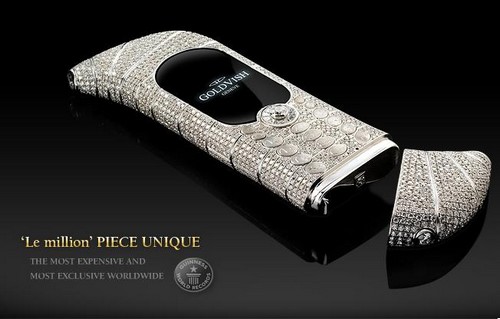
Goldvish “Le million” is designed by renowned designer Emmanuel Gueit, who designed lots of luxury watches and jewellery. The most luxurious and expensive mobile phone, “Le Million” Piece Unique, had launched in Switzerland. This phone awarded by Guinness World Records as the world’s most expensive mobile phones sold in the Millionaire Fair in Cannes, France in September 2006. Often referred to as the world’s most expensive phone at $1.3 million, this designer phone is bejewelled with 18k white gold and 20 carats of VVS1 diamonds.

3. iPhone 3G King’s Button
10 Most Expensive Mobile Phones
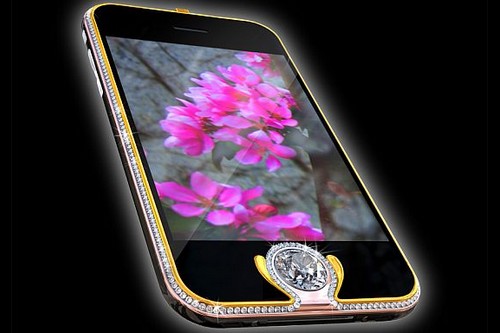
For the third most expensive mobile phone in the world is still occupied by a variant of the iPhone, named King’s Button iPhone 3G. The renowned jeweler from Austria Peter Aloisson is the creater of this phone. 138 diamonds are installed on this phone that makes it worth $2.4 million. The beautiful white diamon of 6.6 carats serves as the home screen button which enhances the beauty of this phone.
2. Supreme Goldstriker iPhone 3G 32GB
10 Most Expensive Mobile Phones
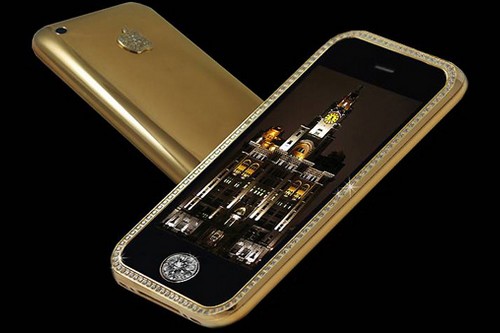
For the second most expensive mobile phone in the world, a variant of the iPhone from Apple, the Supreme iPhone 3G is priced at $ 3,200,000. The iPhone 3GS Supreme features a casing made from 271 grams of solid 22k gold and a screen trimmed with fifty-three 1-carat diamonds. The home button is covered with a single rare 7.1-carat diamond. That’s not all, though—the iPhone 3GS Supreme comes in a chest carved from a single block of granite and sports Kashmir gold and an interior lining made with nubuck top-grain leather.

1. Diamond Rose iPhone 4 32GB
10 Most Expensive Mobile Phones
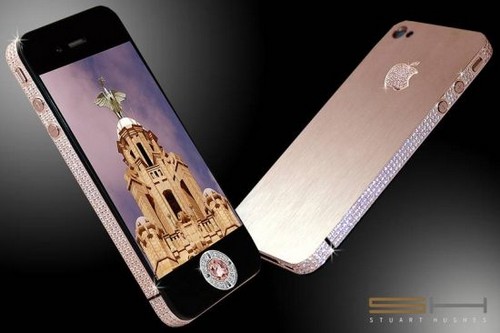
The world’s most expensive iPhone to date is the 32 GB iPhone 4 Diamond Rose by Stuart Hughes. With a price of about $8 million the phone’s bezel is made of rose and approximately 500 individual flawless diamonds that total over 100ct. The back is also rose gold and features the Apple logo all decked out with 53 additional diamonds, while the front navigation button is platinum with interchangeable single cut 7.4ct pink or rare 8ct Flawless diamonds in the center.

Wednesday, 10 June 2015

Motorola Moto G


NETWORKTechnologyGSM / CDMA / HSPA / EVDO
LAUNCHAnnounced2013, November
StatusAvailable. Released 2013, November
BODYDimensions129.9 x 65.9 x 11.6 mm (5.11 x 2.59 x 0.46 in)
Weight143 g (5.04 oz)
SIMMicro-SIM
DISPLAYTypeIPS LCD capacitive touchscreen, 16M colors
Size4.5 inches (~65.2% screen-to-body ratio)
Resolution720 x 1280 pixels (~326 ppi pixel density)
MultitouchYes
ProtectionCorning Gorilla Glass 3
PLATFORMOSAndroid OS, v4.3 (Jelly Bean), upgradable to v5.0 (Lollipop)
ChipsetQualcomm MSM8226 Snapdragon 400
CPUQuad-core 1.2 GHz Cortex-A7
GPUAdreno 305
MEMORYCard slotNo
Internal8/16 GB, 1 GB RAM
CAMERAPrimary5 MP, 2592 Ñ… 1944 pixels, autofocus, LED flash, check quality
FeaturesGeo-tagging, touch focus, face detection, HDR, panorama
Video720p@30fps, stereo sound rec., HDR, check quality
Secondary1.3 MP
SOUNDAlert typesVibration; MP3, WAV ringtones
LoudspeakerYes
3.5mm jackYes
COMMSWLANWi-Fi 802.11 b/g/n, hotspot
Bluetoothv4.0, A2DP, LE
GPSYes, with A-GPS, GLONASS
RadioFM radio
USBmicroUSB v2.0, USB Host
FEATURESSensorsAccelerometer, proximity, compass
MessagingSMS(threaded view), MMS, Email, Push Email, IM
BrowserHTML5
JavaNo
 - Google Drive (50 GB cloud storage)
- Active noise cancellation with dedicated mic
- MP3/AAC+/WAV/Flac player
- MP4/H.264 player
- Photo viewer/editor
- Document viewer
- Voice memo/dial
BATTERY Non-removable Li-Ion 2070 mAh battery
Stand-by
Talk timeUp to 24 h
MISCColorsBlack (front panel), 7 color options (back panel)
SAR US1.17 W/kg (head)     1.06 W/kg (body)    
SAR EU0.79 W/kg (head)    
Price group
TESTSPerformanceBasemark OS II: 559
DisplayContrast ratio: 967:1 (nominal), 2.477 (sunlight)
CameraPhoto / Video
LoudspeakerVoice 81dB / Noise 75dB / Ring 82dB
Audio qualityNoise -92.1dB / Crosstalk -91.4dB
Battery life


Wednesday, 13 May 2015

Samsung, in a race to build your next smartphone chip, may just win


The Korean electronics maker, best known for TVs and mobile devices, also makes the processors powering those devices. Here's why it's now angling to be first with new chip technology.
Samsung isn't just the world's biggest smartphone maker but is also one of the largest semiconductor vendors on the planet. Its operations are based in South Korea, as pictured here in 2013.Shara Tibken/CNET
Samsung, the world's biggest maker of smartphones and TVs, is also dead serious about chips.
So serious that it will spend about $15 billion to open a new semiconductor factory in South Korea by 2017. That's big bucks even compared with the rest of industry, which spends closer to $10 billion for each new factory.
Samsung is proof that Moore's Law matters, the idea that processor power improves exponentially every two years. But to keep up the pace of chip innovation, the industry has had to throw a lot of money and a lot of great minds at the problem. So far, it's paid off for Samsung. The company is the world's biggest vendor of memory chips and the second biggest processor maker overall after Intel, which was co-founded by Gordon Moore, the man behind Moore's Law. Chances are you have a Samsung product in your life, even if it's the flash memory in your favorite tablet.

Today's chip-making business is a race to the tiny. The first companies to make next-generation products smaller and faster stand to win more customers -- at their rivals' expense -- and to recoup their investments. The also-rans? Not so much.
"It's very important for us to be first," said Kelvin Low, senior director of foundry marketing for Samsung's semiconductor business. "These days, second and third becomes extremely challenging ... because from that point on, securing market share is difficult."
Being first is so important, in fact, that Samsung skipped a step in the manufacturing process to get to more advanced chip technology before most of its rivals. Instead of having to learn one new technique, it's implementing at least three at once. That, though, can lead to problems like poor yields.
So far, the risk is paying off. Samsung is attracting new customers, which will give it a bigger slice of the foundry market -- manufacturers hired to build chips designed by so-called "fabless companies" like Qualcomm and Nvidia. Analysts believe Samsung's chip manufacturing business has won back Apple as a customer for the next iPhone processor, giving it both revenue and prestige. Apple buys more chips than any other company on the planet except Samsung, but the Korean company lost Apple's business last year because of ongoing legal fights over phone and tablet designs.
One misstep or delay, though, and all of Samsung's newly won customers might defect to other processor manufacturers.

Keeping up with Moore

In 1965, Intel's Moore noted that chips would double in complexity at a rapid, regular rate -- initially he thought every year, but later revised that to every two years -- as the building blocks of the processor got smaller and were more tightly packed together. That made devices faster, cheaper and more power efficient. His observation, dubbed Moore's Law, has been true for the past 50 years.
But it's become massively expensive for chipmakers to keep up.
Moving to each new generation of processor technology takes years of development and billions of dollars in research, equipment and construction costs. Building a new semiconductor factory can cost upwards of $10 billion, limiting the companies willing and able to play at the leading edge of chip technology. It's also become exponentially more expensive for fabless chip companies to design advanced processors, which means those that don't need the most-advanced technologies for things like high-end smartphones and data centers will be slower to adopt the newer chips.
It's now largely up to four manufacturers to keep Moore's Law going -- Intel, Samsung, Taiwan Semiconductor Manufacturing Co. (TSMC) and Globalfoundries. If those companies don't keep advancing, the smartphones we use will stop getting smarter, and the battery life of those devices will never stretch past a day or two.
Innovation could simply stall.
Chip manufacturing is a big business. Last year, foundries made $46.85 billion in sales, up 16 percent from 2013, according to Gartner. TSMC led the group with more than half of all market share. Samsung, by comparison, ranked No. 4 with 5.1 percent share (though the figure didn't take into account the chips the company builds for itself for use in its smartphones and tablets).
Samsung is in a unique position in the chip market. It not only designs and manufactures semiconductors for its own electronics but also builds processors for other companies -- most notably, smartphone rival Apple. TSMC solely manufactures processors designed by others. Globalfoundries licenses Samsung's technology to build advanced processors for other companies. While Intel has dabbled in the foundry market -- building chips for a few small companies it doesn't compete against -- it dedicates the bulk of its manufacturing capacity for its own processors.

Second place = first loser

Being first with new technology doesn't just bring bragging rights. It attracts more customers and fills a manufacturer's factories -- helping it make more money that it can then invest in even more factories. If a chip manufacturer doesn't have a factory running at capacity, it doesn't make back the money it invested to build the facility in the first place.
Samsung surprised the industry when it started producing what's currently the most advanced technology -- known as 14 nanometers, or billionths of a meter, in reference to the size of part of a transistor -- ahead of TSMC by several months. TSMC said it plans to move to the newer technology later this year, but being even six months behind has put it at a disadvantage when it comes to attracting customers.
TSMC didn't respond to a request for comment, but the company on Thursday projected lower revenue in its current quarter in part because of tougher competition in the chip market.
Samsung is the world's biggest memory chip maker, which most of its processors built in South Korea factories, pictured here in 2013.
"In the last two decades ... the most bleeding-edge technology [aside from Intel] was all developed by TSMC and its foundry service," said Gartner analyst Samuel Tuan Wang. "Now Samsung, for the first time in history, is beating the schedule of TSMC in process technology by almost two quarters."
Samsung also hit that milestone about six months after Intel -- instead of lagging its US rival by years. But Intel, while currently selling many 14-nanometer PC chips, has been slower to apply the technology to its mobile processors. Since more smartphone chips are sold than PC chips, Intel has been missing out on the faster-growing market. Samsung's Galaxy S6, which will likely be the Korean company's top-selling smartphone this year, is the first product to use Samsung's 14-nanometer chips.
How did Samsung beat TSMC? It decided to skip over 20 nanometers, the technology that's currently used by TSMC to build Apple's A8 and A8X iPhone chips and iPad processors. Instead, Samsung turned its attention and R&D investment to 14 nanometers.
"It was not an overnight thing ... [and] it's not magic," Low said. "We basically put more focus on 14 nanometers, while some other foundries chose to put [their] focus on 20 or 22."
