// EDUCATION & TECHNOLOGY: News
Showing posts with label News. Show all posts

Wednesday, 12 August 2015

Effect of Modi's foregien visits


Prime minister Mr. Narendra Modi has visited many countries since he took oath almost a year ago. Many of us criticizing him for his so many foregien trips including opponent parties. But believe me friends his foregien trips are quite beneficial for the country. Opponents are just misleading by saying his foregien trips are worthless. I will give you some statics given by a leading newspaper and you will be amazed.
Read carefully-

India received $19.78 billion foreign direct
investment (FDI) from 12 countries visited by Prime Minister
Narendra Modi in financial year 2014-15, Parliament was
informed today.
During the period, Indian companies invested $3.42 billion in
these countries which include Bhutan, Brazil, Nepal, Japan,
the US, Myanmar, Australia, Fiji, Seychelles, Mauritius, Sri
Lanka and Singapore.
The total outflow and inflow of foreign investment in general
for 2014-15 fiscal was $6.42 billion and $75.71 billion,
respectively, Commerce and Industry Minister Nirmala
Sitharaman said in a written reply to Rajya Sabha.
In 2014-15, FDI in India increased by 27 per cent to $30.93
billion."

So you can analyze now that his foreign trips are worthwhile and can boost our economy fastly.

Tuesday, 11 August 2015

Know Google's new CEO- An Indian


As Google's third CEO, Pichai is taking over a
company in flux. In a massive corporate
restructuring, Google has become a subsidiary of
Alphabet, a new company run by Google co-
founders Larry Page and Sergey Brin.
Pichai, 43, was born in Tamil Nadu, India. After
graduating college in India for metallurgical
engineering, he came to the United States to study
at Stanford University -- the alma mater of the
Google founders and so many other early Googlers.
Pichai got his start at Google in 2004, building the
now defunct Google toolbar. The toolbar allowed
Internet Explorer and Firefox customers to make
Google their default search engine .
In the next few years, he took over Chrome,
Google's Web browser. When he introduced Chrome
to the world in 2008, the world reacted with
puzzlement: How could it compete with Internet
Explorer and Firefox?
Yet Chrome eventually became the world's most
used Web browser. Chrome even became a
successful operating system for Chromebook
laptops, used mostly by schools.
Pichai eventually became vice president, then senior
vice president in 2013 when he added Android to his
growing portfolio.
Last year, he became Google's product chief,
overseeing virtually all Google software products
not named YouTube. He runs Google+, Google
Wallet, Android Pay and Google's Apps services for
businesses.


Pichai also runs the Google I/O developers
conference, where he serves as the public face of
Google for eager customers waiting to know what
the next versions of Android and Chrome will do. He
also shows off the company's biggest new products
and services, including kicking off this year's
massive Google Photos announcement.
Subdued and generally quiet, Pichai is admired at
Google not just for his obvious engineering talents
but also his general likability.
"Sundar has been saying the things I would have
said (and sometimes better!) for quite some time
now, and I've been tremendously enjoying our work
together," said Page in a blog post announcing the
move.
As CEO of Google, he gets one more feather in his
cap and adds a few more products to his now giant
kingdom -- search, ads, maps, apps, Android,
Chrome and YouTube will now all be under his
purview.

Friday, 10 July 2015

Reservation in Education

Reservation in our education system , is considered to be a backbone to certain communities. These communities are Schedule Casts, Schedule tribe and OBC ( creamy and Non creamy). So why government is given these communities such special reservation in education as compared to general person.


it all start with untouchablity, means in past schedule casts were treated to be untouchable. They didn't have rights in society same as upper caste peoples. They worked for upper caste people, in overall they were badly treated at that time. Due to which trend started that a person who is of lower caste can't eat, live or even get education with upper caste people. As time passed they lower caste people were so harreshed that they were mentally and socially get neglected.
After Independence, because we live in Democratic country where everyone has right to live equally, it was realized that these lower castes peoples whose percentage was very less in all sectors as compared to upper caste peoples should be increased, so only we can talk about equality. The overall thought according to me was right because as a human being if you think whatever lower caste people faced during post independence was inhuman act. In starting Parliament implemented this for 10 years but after every 10 years it was increased and even now we have reservation in education system.
according to my view what I observed regarding reservation is that at starting the reservation rule was absolutely right because at that time lower caste people percentage in all sectors were so less. Still lots of areas are such where untouchability exists for which I totally support reservation. But what I observed regarding reservation system is that a person who needs it more is not getting this. Let me give you an simple example, a person from lower caste who don't have anything in his childhood achieved great success in his life with getting reservation in every field. According to me it is right if he gets reservation. But now think that his son or daughter giving any exam getting reservation is right or wrong. It is wrong because his son or daughter have everything now just because they are from lower caste they are getting reservation is wrong. Now a days what I observed is that maximum number of peoples whom are getting reservation don't require it. But some of areas in India have peoples , must have reservation which I support.
one thing I want to add here is that now reservation should not be given in name of caste. Because according to me lots of people just to get reservation in India make their false certificates though they have enough money but getting all facilities just because they are lower caste in papers. This I observed in my college time.


Another thing which I want to add in not to give reservation in name of caste is that, think of a poor student. His father don't have enough money so he can get proper education. Just because he is from general category he can't get any such reservation. It seems totally wrong. Though the concept of reservation was right but now I think amendments should be done. Reservation earlier during just after independence can be understood based on caste, but now after 6 decades still giving reservation just in name of caste didn't seem proper, reservation I totally support but it should be given due to financial conditions of one. Poor must get reservation because poor is poor we can't decide him in terms of his caste as upper caste poor or lower caste poor or Hindu poor or Muslim poor.
give your views also.

By-
Pankaj Pathak

Tuesday, 7 July 2015

Effect of technology on education


In the words of "Nelson Mandela"- " education is the most powerful weapon which you can use

to change the world".


thinking of this deeply, when we thought changing the world by education, what does it mean?

Simply it means, education teach people to think critically, positively. So the world can change.

technology from some past decades is also changing; so is it right to say technology is changing

the world? Yes of course. Technology has changed the way we live, travel, and affect all of us

somehow. If this technology is changing the world and change in world can be done by

education we can think of that technology has changed the education.

 But as it said every coin has 2 sides, effect of technology on education also have 2 sides.

thinking of negative side, think of calculators. Though it makes calculation easy and fast, but

making our capability of thinking is decreasing. Games are also considered to be part of good

education, but when we say games it does it mean graphical games. No, it means physical

activities so we can be fit to be learn everything. Video games are attracting new generation

though they are colorful, interesting but they make us physically imperfect.


as it said noting has only bad in it. Technology has changed our education system a lot. Distance

learning, e- education, smart classes, computers are those examples where we see positive

impact of technology on education. And there is many more latest technologies in education

system now a days. Technology has made our education very fast and advanced, so thanks to

technology.


-by
Pankaj Pathak
(pankaj.pathak175@gmail.com)

Thursday, 18 June 2015

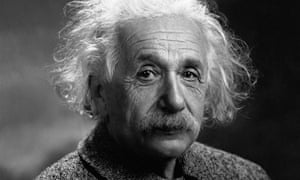
Five reasons we should celebrate Albert Einstein


Albert Einstein ... a voice for the oppressed. Photograph: Corbis
 Albert Einstein ... a voice for the oppressed. Photograph: Corbis

1. His science

Einstein was, first and foremost, a scientist. In 1905 and again in 1916, heradically revised our understanding of the universe. He was a pictorial thinker who came up with a new, intuitive sense of what reality looked like. Physics at the start of the 20th century was a rather settled endeavour, not seemingly in need of radical revision. We thought light was a wave and that duration, length and mass were objective facts of the world. We thought that space was a flat, Euclidean entity, unaffected by the distribution of matter and energy within it. Einstein, a mere patent clerk when he first began suggesting differently, showed us that light must be thought of as a particle when it is emitted or absorbed, that matter is composed of atoms, that space is malleable, undulating with the distribution of the stuff within it, that how long or massive an object is or the time order of closely occurring events is not a fact of the world, but merely a fact of our point of view. He showed that these perspectival truths were well-behaved when they were placed in a four-dimensional conceptual framework. Seeing may be believing, but what we should believe about the universe, Einstein demonstrated, requires seeing it from a reference frame beyond that of the human senses.


2. His politics

Einstein joked to his dear friend Max Born that he had a version of the Midas touch: everything he said turned to newsprint. Einstein’s science made him a worldwide celebrity, a status others might have enjoyed, but which Einstein despised. He was no shrinking violet, yet he detested the shallowness and meaningless absurdity that came with his universal adoration. But he realised that it could be handy. He was given a cultural megaphone and he decided that its best use was to amplify the concerns of those whose voices were least heard. Whether it was his own Jewish brethren suffering the insults of antisemitism, African-Americans suffering systematic racism, the poor kept down by structural barriers to advancement, or political dissidents in the Soviet Union who were being repressed, Einstein was unabashedly vocal in trying to change the institutions that led to inequality and injustice. His standing provided him with a unique place to speak for those who were silenced and he made great use of it in the name of universal human dignity.

3. His immodesty

Einstein never lacked confidence. Strengthened by his convictions, he was impervious to the power of those with superior social or professional standing, and resolute in his willingness to state his beliefs publicly. As social psychologists have shown since the famous experiments of Solomon Asch and Stanley Milgram, humans are greatly influenced by the opinions of those around us, especially those who occupy positions of authority. We can shy away from reasonable and ethical beliefs, if we sense that we are in the minority for holding those views. But Einstein stands as an example of intellectual commitment. His revolutionary physical theories and his advocacy for peace at times of war and for better treatment of those in need were often unpopular. Einstein was investigated by the FBI for his views, and he received death threats from Nazi sympathisers. He was threatened with the loss of his position at the Institute for Advanced Studyfor his vocal support for his beliefs and causes. Yet he steadfastly refused to give in to fashion, expedience or groupthink. It is a cliche to say someone has the “courage of his convictions”, but Einstein is a figure of great courage in publicly expounding views he thought correct and morally necessary when such positions were dangerously unpopular.

4. His modesty

Einstein was flummoxed by his public reception. In one famous incident, he was accompanying Charlie Chaplin to the opening of his film City Lights when they were mobbed by thousands of fans. “What does it mean?” Einstein asked Chaplin, who replied: “Nothing.” We have a cognitive bias that leads us to be more apt to believe the praise we receive and to explain away criticism. We are the focus of our lives and with the contemporary cults of individuality and celebrity, too many people eagerly welcome the spotlight and take it as a sign of their superiority. But Einstein did not seek mass adoration or personal aggrandisement. He was not present to receive his Nobel prize. He refused the presidency of Israel. He was willing to step into the public eye when it suited his causes, but he was not one to seek fame for the sake of fame.

5. His meaning as a cultural symbol of modernity

I often ask audiences: “When I say the name Albert Einstein, what is the first thing that comes to mind?” Regardless of the demographic or the country in which I ask this, inevitably the response is “the hair”. Here is a man who changed the way the way we see reality, who stared down hatred and stood up for justice, yet despite all of this, the thing we immediately think of is that mane of unkempt, wild white hair. That may seem shallow of us, but I think it is a good thing. What does Einstein’s hair signify? It was a political statement – he refused to conform to social standards of personal appearance. He was unapologetic in his individuality and unashamed of being different. Growing up a Jew in Wilhelmine Germany, where he was sent to a Catholic school, he was always aware of being an outsider and became not only comfortable with his distance from the mainstream, but took it as a mark of pride. On the one hand, Einstein is the very icon of the genius, someone whose innate intelligence made him radically unlike the masses. But in allowing his hair to become the spectacle it was, he became a symbol that said that special people can come from anywhere, can look like anyone. His physics appeared at a time when the regular order was being challenged by modernist movements in mathematics, science, art, religion, governmental and economic structures, even the very sense of what it was to be a human was being reconsidered from its core. Einstein, with his wild hair, signalled that human advancement comes not from the conformity the authorities demand, but from difference – and that all of us at various times in our lives feel a sense of alienation. Einstein gives us pride in ourselves as individuals who can make a difference; we can revel in free thought, but there is no need in doing so to reject our shared humanity.
 Steven Gimbel’s Einstein: His Space and Times is published by Yale. To order a copy for £14.99, go to bookshop.theguardian.com or call 0330 333 6846. Free UK p&p over £10, online orders only. Phone orders min. p&p of £1.99.

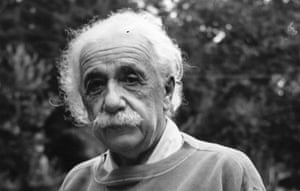
Albert Einstein.


Wednesday, 17 June 2015

Super Cars


Lamborghini Aventador

Lamborghini Aventador
“If you want to be someone you buy a Ferrari – If you are someone you own a Lamborghini.” Apparently that’s what music superstar Frank Sinatra said when he got his Miura in 1969, and he might not be too wrong as Ferrari don’t actually make our prestigious list of supercars but the Lamborghini Aventador is right up there!
The Aventador is Lamborghini’s latest tarmac-grade V12 weapons system that replaces the 10-year-old Murcielago. It’s also the fastest production car that has ever come out of Lamborghini’s factory in the small rural town of Sant’Agata Bolognese in Italy.
Lamborghini does things differently to most other supercar manufacturers; it likes to push the envelope, both from a design sense and a technological standpoint. What they have created in the Aventador is the supercar of the future for the here and now. It’s the definition of extreme in the automotive world and wherever you look, inside or outside this car, boundaries have been pushed well beyond the current benchmarks. Lamborghini calls it ‘the new reference among super sports cars’.

SSC Ultimate Aero XT


If you are unfamiliar with SSC they are the company formerly known as Shelby Super Cars. SSC have only released one extreme supercar to date, but with their multiple award winning Ultimate Aero setting the standard, rather than watching the Aero drive away into the sunset, they are actually bringing us another gem for 2013 with the ‘SSC Ultimate Aero XT‘!
The model will be a special edition of the Ultimate Aero which means if you blink you might just miss it as there will only be a small number of examples built and of course it will be one of the fastest cars in the world!
It sprints to 100 km/h (62 mph) in just 2.65 seconds and hits 322 km/h (200 mph) in just 15.65 seconds, which is a new wold record. It also screams to 100 mph in 11.25 seconds. This monster has a projected top speed of 273 mph, but get this…it has only been tested up to just over 250 mph!!

Koenigsegg Agera R 2013


Koenigsegg Agera R 2013
Koenigseggs have produced some fine supercars over the years and the 2013 Agera R is set to be the result of Koenigseggs endless pursuit for perfection.
The Agera R is the only roadster Hypercar with a detachable and stowable hardtop, bringing the best of two worlds. This in combination with 120 litres of luggage space, truly combine extreme performance with everyday usability.
But let’s not forget about the speed! The 2013 model features new Aircore hollow carbon fiber wheels, upgraded power and enhanced aerodynamics resulting in an incredible top speed of approximately 440 km/h (273  mph).

Bugatti Veyron SupersportBugatti Veyron


Since it’s introduction in 2005, the The Bugatti Veyron has been the most sought after, powerful, and fastest supercar in the world!
If you have a need for speed and have the mountains of cash to buy the most expensive car in the world, it just doesn’t get much better than the Bugatti Veyron Supersport!
The Bugatti hits 0-62 mph in less than 3 seconds at 2.4 seconds. The progression in hitting given metrics for the Veyron SS include 150mph at 10 second, 186 mph at under 15 seconds, and in less than a minute, you could be going as fast as 245 mph.
The first five cars that came off the line in 2010 were sold as a limited “World Record Editions” after clocking a staggering record of 267.9 miles per hour at Volkswagons test tracks in Germany. Priced at 2.4 million dollars (2.08 million Euros at time of purchased) each, the first five immediately sold out

.

10 Most expensive Mobile handset in the world


Phone is a major requirement of our daily lives. Mobile phone or even has the prices vary widely ranging from the cheapest phones in the world up to the most expensive mobile phone in the world. In today’s society, there aren’t many things that people are more attached to than their mobile phones. A person’s cell phone is his gateway into everything that goes on in his life. With the recent advances in technology, it now seems as if your cell phone can do everything that your computer can do. It then comes as no surprise that your cell phone could cost as much as it does. If you’re in the market for a phone that will do nearly everything, then you should expect to pay a lot of money. Here is a list of world’s top 10 most expensive mobile phones.
These are 10 Most Expensive Mobile Phones in the World.

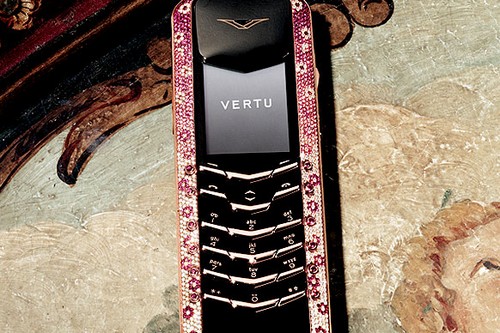
10. Vertu Signature Diamond

10 Most Expensive Mobile Phones
Exclusive luxury phones from Vertu. Vertu is very famous for its luxury mobile phone products, including mobile phones Vertu Signature Diamond is included in order to-10 list of the world’s most expensive mobile phones. This phone is made of platinum and claimed the best assembly process is done by hand, not machines. Phone decorated with a pretty fancy diamonds produced only 200 pieces. The price of this phone is $ 88,000.

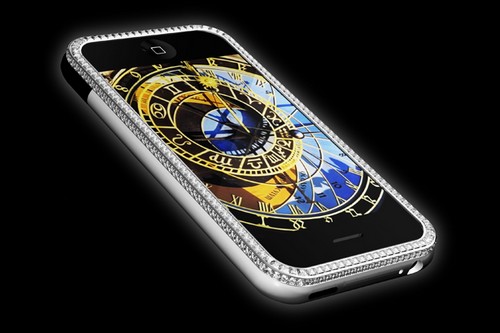
9. iPhone Princess Plus

10 Most Expensive Mobile Phones
iPhone Princess Plus has a feature that is not much different from other Apple iPhone mobile phone, which makes this into the top 10 most expensive mobile phones in the world. This iPhone is designed by famous designer Austria, Peter Aloisson. Beside the gold, this special iPhone flavour comes with no less than 138 princess cut and 180 brilliant cut diamonds with a weight of 16.50 – 17.75. And according to Peter Aloisson, the diamonds have the best quality, so owning such a device is quite a remarkable thing. It’s price is $ 176.400.

8. BlackDiamond VIPN Smartphone

10 Most Expensive Mobile Phones
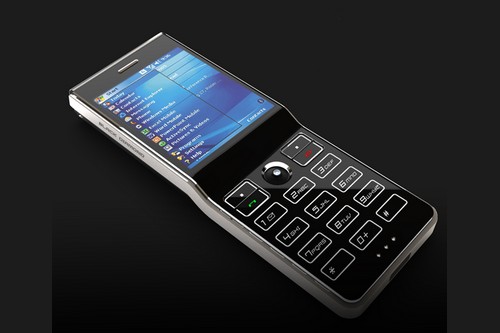
At no. 8 in the world’s most expensive mobile phone is Sony Ericsson’s Black Diamond. Jaren Goh created this stylish concept for Sony. It features mirror detailing, polycarbonate mirror and an organic LED technology. Of course, when it comes to Sony, nobody can challenge the screen results. It is decorated with two diamonds, one on the navigation buttons and the other in the back of the phone. The price of this phone is $300,000.

7. Vertu Signature Cobra

10 Most Expensive Mobile Phones
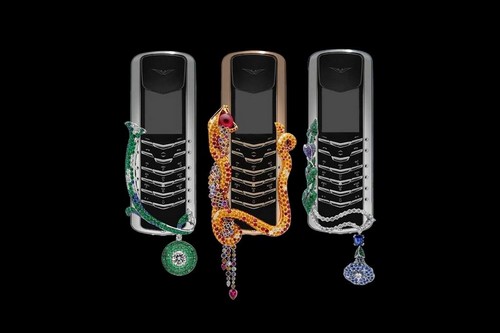
Vertu Signature Cobra ranks seven of the world’s most expensive mobile phone. The designs are quite exclusive with the existence of forms such as the Cobra snake on the phone side. Designed by French jeweller, Boucheron, the ritzy phone features one pear-cut diamond, one round white diamond, two emerald eyes, and 439 rubies.

6. Gresso Luxor Las Vegas Jackpot

10 Most Expensive Mobile Phones
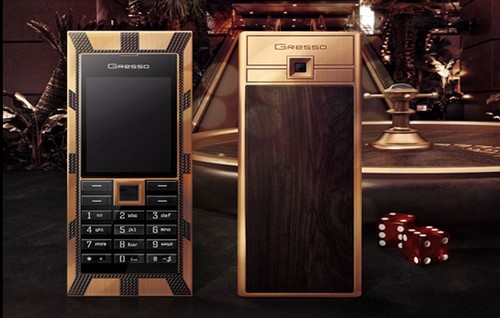
This phone comes from a traditional purveyor of a luxury handsets – Gresso, and is called Luxor Las Vegas Jackpot. This phone was established in Switzerland in 2005. It is made of solid gold weighing 180 grams. The back panel is made up of African backwoods that is more than 200 years old. That wood is the most expensive wood in the world. Its keys are made of sapphire crystal. And it costs a cool $1 million.

5. Diamond Crypto Smartphone

10 Most Expensive Mobile Phones
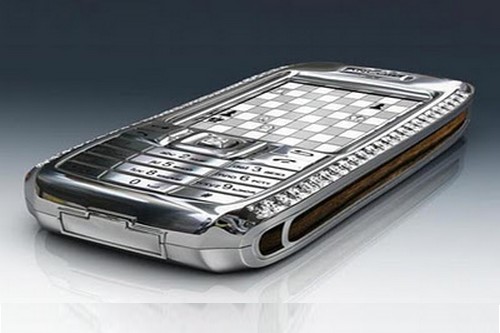
Based on Windows CE, this smart phone was designed by luxury accessories maker Peter Aloisson. This unique object de art is priced at a crisp $1.3 million and is tagged as the costliest in the world. This one features a cover adorned with 50 diamonds, 10 of which are the rare blue ones. Apart from this, it also features s few sections made in rose gold as well. It also gives protection against kidnapping and technological blackmail.

4. GoldVish Le Million

10 Most Expensive Mobile Phones
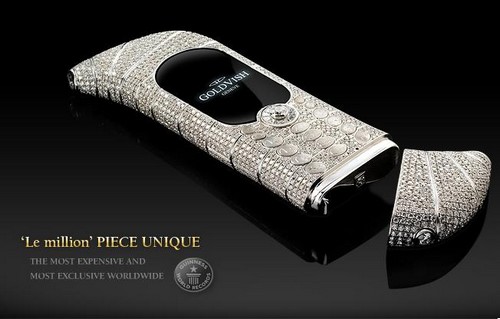
Goldvish “Le million” is designed by renowned designer Emmanuel Gueit, who designed lots of luxury watches and jewellery. The most luxurious and expensive mobile phone, “Le Million” Piece Unique, had launched in Switzerland. This phone awarded by Guinness World Records as the world’s most expensive mobile phones sold in the Millionaire Fair in Cannes, France in September 2006. Often referred to as the world’s most expensive phone at $1.3 million, this designer phone is bejewelled with 18k white gold and 20 carats of VVS1 diamonds.

3. iPhone 3G King’s Button

10 Most Expensive Mobile Phones
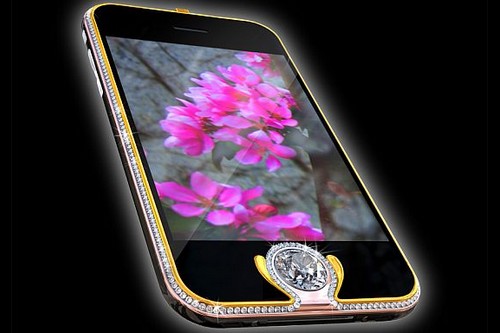
For the third most expensive mobile phone in the world is still occupied by a variant of the iPhone, named King’s Button iPhone 3G. The renowned jeweler from Austria Peter Aloisson is the creater of this phone. 138 diamonds are installed on this phone that makes it worth $2.4 million. The beautiful white diamon of 6.6 carats serves as the home screen button which enhances the beauty of this phone.
2. Supreme Goldstriker iPhone 3G 32GB
10 Most Expensive Mobile Phones
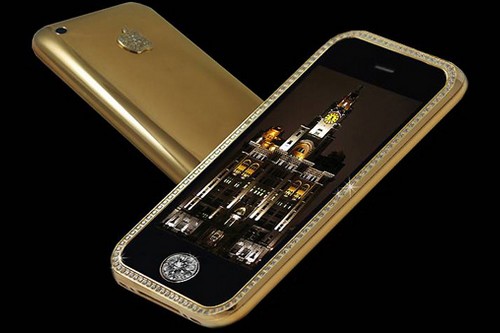
For the second most expensive mobile phone in the world, a variant of the iPhone from Apple, the Supreme iPhone 3G is priced at $ 3,200,000. The iPhone 3GS Supreme features a casing made from 271 grams of solid 22k gold and a screen trimmed with fifty-three 1-carat diamonds. The home button is covered with a single rare 7.1-carat diamond. That’s not all, though—the iPhone 3GS Supreme comes in a chest carved from a single block of granite and sports Kashmir gold and an interior lining made with nubuck top-grain leather.

1. Diamond Rose iPhone 4 32GB

10 Most Expensive Mobile Phones
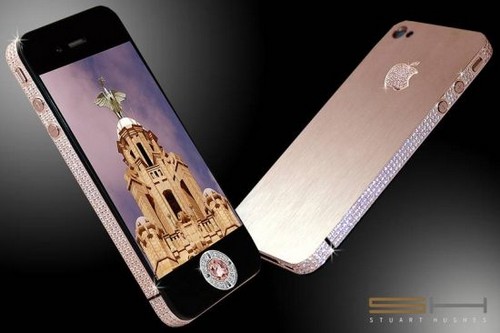
The world’s most expensive iPhone to date is the 32 GB iPhone 4 Diamond Rose by Stuart Hughes. With a price of about $8 million the phone’s bezel is made of rose and approximately 500 individual flawless diamonds that total over 100ct. The back is also rose gold and features the Apple logo all decked out with 53 additional diamonds, while the front navigation button is platinum with interchangeable single cut 7.4ct pink or rare 8ct Flawless diamonds in the center.

Sunday, 14 June 2015

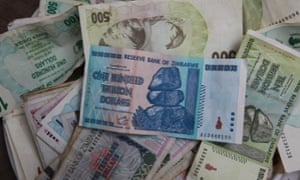
Zimbabwe offers new exchange rate: $1 for 35,000,000,000,000,000 old dollars

Central bank discards local currency after years of hyperinflation which at one point reached 500,000,000,000%


An old Z$100tn note pictured in 2010.

Zimbabweans will start exchanging “quadrillions” of local dollars for a few US dollars next week as President Robert Mugabe’s government discards its virtually worthless national currency.
The southern African country started using foreign currencies including the US dollar and South African rand in 2009 after the Zimbabwean dollar was ruined by hyperinflation, which hit 500 billion per cent in 2008.
At the height of the country’s economic crisis, Zimbabweans had to carry plastic bags bulging with banknotes to buy basic goods. Prices were rising at least twice a day.
From Monday, customers who held Zimbabwean dollar accounts before March 2009 can approach their banks to convert their balance into US dollars, the governor of the Reserve Bank of Zimbabwe, John Mangudya, said in a statement.
Zimbabweans have until September to turn in their old banknotes, which some people sell as souvenirs to tourists.
Bank accounts with balances of up to 175 quadrillion Zimbabwean dollars will be paid $5. Those with balances above 175 quadrillion dollars will be paid at an exchange rate of $1 for 35 quadrillion Zimbabwean dollars.
The highest – and last – banknote to be printed by the bank in 2008 was 100tn Zimbabwean dollars. It was not enough to ride a public bus to work for a week.
The bank said customers who still had stashes of old Zimbabwean notes could walk into any bank and get $1 for every 250tn they hold. That means a holder of a 100tn banknote will get 40 cents.
The bank has set aside $20m to pay Zimbabwean dollar currency holders.

Wednesday, 20 May 2015

Maggi May Not Be Safe! Officials Find High Levels Of MSG And Lead, Call For Nationwide Ban


 Food inspectors have ordered Nestle India to recall a batch of Maggi noodles from shops across the country, saying the product contained dangerous levels of lead. The Food Safety and Drug Administration (FDA) in Uttar Pradesh said high lead content was found during routine tests on two dozen packets of instant noodles, manufactured by Nestle in India. Two FDA officials said all the packets of instant noodles tested in the state-run laboratory were contaminated. They found a lead concentration of 17.2 parts per million (ppm), nearly seven times the permissible limit. The FDA officials said the acceptable limit of lead ranges between 0.01 ppm and 2.5 ppm.
The 2-minute noodles 'Maggi' has come under regulatory scanner after samples collected in some parts of Uttar Pradesh were found containing added monosodium glutamate (MSG) and lead in excess of the permissible limit, official sources said. 

The Lucknow Food Safety and Drug Administration has initiated inquiry and written to the Food Safety and Standards Authority of India (FSSAI) in New Delhi seeking to cancel the licence for Maggi. The state regulator has also asked FSSAI to order sampling of the product from across the country to check quality, officials said. 

"We have tested Maggi samples at Kolkata's referral laboratory. The test results show that there are added monosodium glutamate and excess of lead. We have ordered further sampling," FSDA Assistant Commissioner Vijay Bahadur Yadav told TOI. 

However, Nestle, which manufactures Maggi, maintains that it does not add monosodium glutamate to the product, whereas presence of excess lead is "surprising" for the company. 

"We do not add MSG to MAGGI Noodles and glutamate, if present, may come from naturally occurring sources. Food regulators in India also do not specify any limit for the presence of MSG / Glutamate," a Nestle spokesperson said. He said, "We are surprised with the lead content supposedly found in the sample. We monitor the lead content regularly as part of regulatory requirements, and tests at our own accredited laboratories as well as those by independent external accredited laboratories have consistently shown the results to be well within the permissible limit." 

According to Yadav, test results showed Maggi containing 17 parts per million lead, whereas the permissible limit is 0.01ppm. Nestle says its records show lead content is negligible and less than 1 % of the fixed limit. 

Monosodium glutamate, a kind of amino acid which occurs naturally in many agricultural products, is often also added artificially to packaged food to enhance flavour. Regulators and experts say such additives can be harmful for health, mainly for children. Food safety regulations mandate companies to specify on the packaging if MSG has been added. 

When contacted, FSSAI said it will examine the case once it receives a detail report from UP and will immediately order sampling from other states. "Enforcement of the Act lies with state government and they must keep a stringent check. Once we receive communication from the state, we will certainly examine and take immediate cognizance," a senior FSSAI official said. 

Nestle said so far it has not been informed about any cancellation of licence or ban on the product. It also maintains that Maggi noodles "conform to all applicable food laws and regulations".
(Originally published in The Times Of India)

Wednesday, 13 May 2015

Samsung, in a race to build your next smartphone chip, may just win


The Korean electronics maker, best known for TVs and mobile devices, also makes the processors powering those devices. Here's why it's now angling to be first with new chip technology.
Samsung isn't just the world's biggest smartphone maker but is also one of the largest semiconductor vendors on the planet. Its operations are based in South Korea, as pictured here in 2013.Shara Tibken/CNET
Samsung, the world's biggest maker of smartphones and TVs, is also dead serious about chips.
So serious that it will spend about $15 billion to open a new semiconductor factory in South Korea by 2017. That's big bucks even compared with the rest of industry, which spends closer to $10 billion for each new factory.
Samsung is proof that Moore's Law matters, the idea that processor power improves exponentially every two years. But to keep up the pace of chip innovation, the industry has had to throw a lot of money and a lot of great minds at the problem. So far, it's paid off for Samsung. The company is the world's biggest vendor of memory chips and the second biggest processor maker overall after Intel, which was co-founded by Gordon Moore, the man behind Moore's Law. Chances are you have a Samsung product in your life, even if it's the flash memory in your favorite tablet.

Today's chip-making business is a race to the tiny. The first companies to make next-generation products smaller and faster stand to win more customers -- at their rivals' expense -- and to recoup their investments. The also-rans? Not so much.
"It's very important for us to be first," said Kelvin Low, senior director of foundry marketing for Samsung's semiconductor business. "These days, second and third becomes extremely challenging ... because from that point on, securing market share is difficult."
Being first is so important, in fact, that Samsung skipped a step in the manufacturing process to get to more advanced chip technology before most of its rivals. Instead of having to learn one new technique, it's implementing at least three at once. That, though, can lead to problems like poor yields.
So far, the risk is paying off. Samsung is attracting new customers, which will give it a bigger slice of the foundry market -- manufacturers hired to build chips designed by so-called "fabless companies" like Qualcomm and Nvidia. Analysts believe Samsung's chip manufacturing business has won back Apple as a customer for the next iPhone processor, giving it both revenue and prestige. Apple buys more chips than any other company on the planet except Samsung, but the Korean company lost Apple's business last year because of ongoing legal fights over phone and tablet designs.
One misstep or delay, though, and all of Samsung's newly won customers might defect to other processor manufacturers.

Keeping up with Moore

In 1965, Intel's Moore noted that chips would double in complexity at a rapid, regular rate -- initially he thought every year, but later revised that to every two years -- as the building blocks of the processor got smaller and were more tightly packed together. That made devices faster, cheaper and more power efficient. His observation, dubbed Moore's Law, has been true for the past 50 years.
But it's become massively expensive for chipmakers to keep up.
Moving to each new generation of processor technology takes years of development and billions of dollars in research, equipment and construction costs. Building a new semiconductor factory can cost upwards of $10 billion, limiting the companies willing and able to play at the leading edge of chip technology. It's also become exponentially more expensive for fabless chip companies to design advanced processors, which means those that don't need the most-advanced technologies for things like high-end smartphones and data centers will be slower to adopt the newer chips.
It's now largely up to four manufacturers to keep Moore's Law going -- Intel, Samsung, Taiwan Semiconductor Manufacturing Co. (TSMC) and Globalfoundries. If those companies don't keep advancing, the smartphones we use will stop getting smarter, and the battery life of those devices will never stretch past a day or two.
Innovation could simply stall.
Chip manufacturing is a big business. Last year, foundries made $46.85 billion in sales, up 16 percent from 2013, according to Gartner. TSMC led the group with more than half of all market share. Samsung, by comparison, ranked No. 4 with 5.1 percent share (though the figure didn't take into account the chips the company builds for itself for use in its smartphones and tablets).
Samsung is in a unique position in the chip market. It not only designs and manufactures semiconductors for its own electronics but also builds processors for other companies -- most notably, smartphone rival Apple. TSMC solely manufactures processors designed by others. Globalfoundries licenses Samsung's technology to build advanced processors for other companies. While Intel has dabbled in the foundry market -- building chips for a few small companies it doesn't compete against -- it dedicates the bulk of its manufacturing capacity for its own processors.

Second place = first loser

Being first with new technology doesn't just bring bragging rights. It attracts more customers and fills a manufacturer's factories -- helping it make more money that it can then invest in even more factories. If a chip manufacturer doesn't have a factory running at capacity, it doesn't make back the money it invested to build the facility in the first place.
Samsung surprised the industry when it started producing what's currently the most advanced technology -- known as 14 nanometers, or billionths of a meter, in reference to the size of part of a transistor -- ahead of TSMC by several months. TSMC said it plans to move to the newer technology later this year, but being even six months behind has put it at a disadvantage when it comes to attracting customers.
TSMC didn't respond to a request for comment, but the company on Thursday projected lower revenue in its current quarter in part because of tougher competition in the chip market.
Samsung is the world's biggest memory chip maker, which most of its processors built in South Korea factories, pictured here in 2013.
"In the last two decades ... the most bleeding-edge technology [aside from Intel] was all developed by TSMC and its foundry service," said Gartner analyst Samuel Tuan Wang. "Now Samsung, for the first time in history, is beating the schedule of TSMC in process technology by almost two quarters."
Samsung also hit that milestone about six months after Intel -- instead of lagging its US rival by years. But Intel, while currently selling many 14-nanometer PC chips, has been slower to apply the technology to its mobile processors. Since more smartphone chips are sold than PC chips, Intel has been missing out on the faster-growing market. Samsung's Galaxy S6, which will likely be the Korean company's top-selling smartphone this year, is the first product to use Samsung's 14-nanometer chips.
How did Samsung beat TSMC? It decided to skip over 20 nanometers, the technology that's currently used by TSMC to build Apple's A8 and A8X iPhone chips and iPad processors. Instead, Samsung turned its attention and R&D investment to 14 nanometers.
"It was not an overnight thing ... [and] it's not magic," Low said. "We basically put more focus on 14 nanometers, while some other foundries chose to put [their] focus on 20 or 22."